Deep-Sea Nodules Targeted by Miners Are Teeming With Undiscovered Microscopic Life
Recent scientific research reveals that polymetallic nodules on the Pacific Ocean floor harbor thousands of microscopic animals, raising environmental concerns for the emerging deep-sea mining industry.
 📰Gadget News
Photo: gizmodo.com
Key points
- Polymetallic nodules in the Pacific Ocean harbor thousands of microscopic animals.
- The Clarion-Clipperton Zone is a primary target for commercial deep-sea mining trials.
- Researchers warn that mining these non-renewable formations could cause irreversible biodiversity loss.
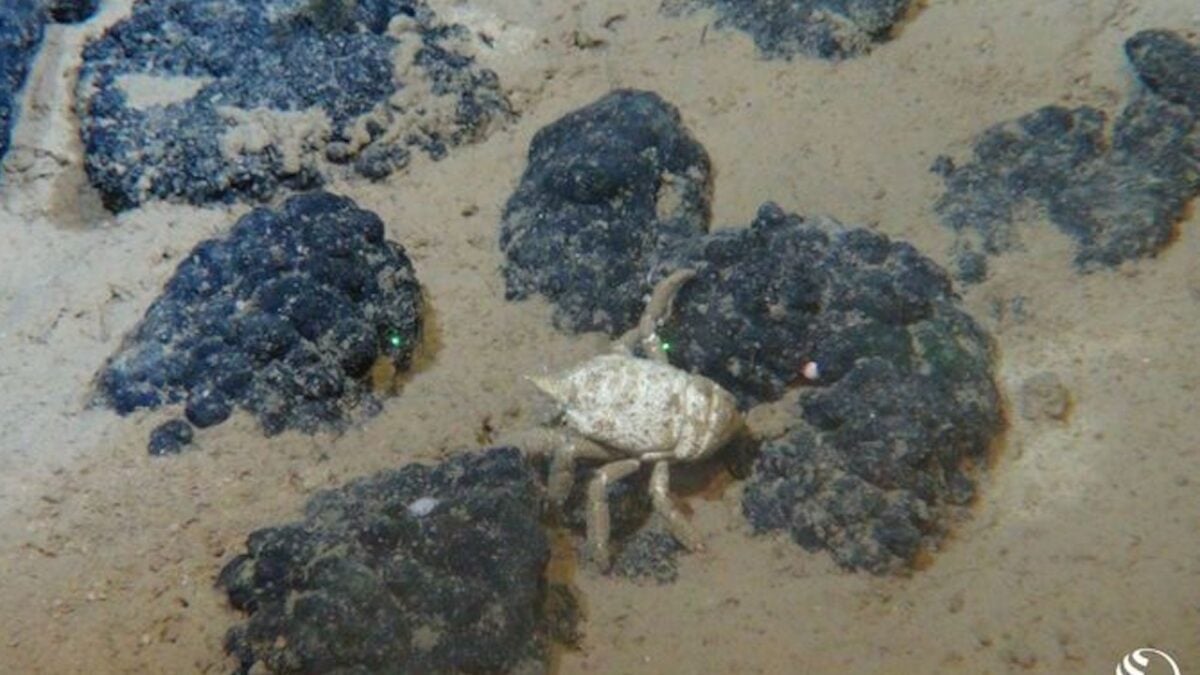
Stone-like mineral deposits known as polymetallic nodules, scattered across the floor of the Pacific Ocean at depths between 13,000 and 21,300 feet, are far from barren. Recent findings published in Scientific Reports show that these potato-shaped formations—composed of iron and manganese layers built up over millions of years—act as vital habitats for thousands of microscopic marine creatures.
Researchers examining hundreds of nodules from the Clarion-Clipperton Zone between Mexico and Hawaii discovered 4,139 animals across 244 of the rock formations. Lead author Coral Diaz-Recio Lorenzo noted that the crevices within the nodules provide protective shelters for species completely absent from the surrounding soft sediment of the ocean floor. Because these geological formations take millions of years to develop, they are entirely non-renewable on human timescales.
As commercial entities trial technology for deep-sea mining, scientists warn that extracting these metal-rich rocks could permanently destroy unique ecosystems. Co-author Sabine Gollner emphasized that commercial operations risk causing an irreversible loss of uncataloged biodiversity, a factor that must be heavily weighed in future environmental management policies.
Source gizmodo.com — gizmodo.com/deep-sea-miners-want-these-rocks-for-their-metals-scientist… ↗
Read next
 🏠Smart Home
Modders Unlock Higher Frame Rates for GTA 6 on Jailbroken PS5 Consoles
Modders have successfully bypassed the 30 FPS limit in GTA 6 on jailbroken PlayStation 5 consoles, enabling higher frame rates on supported displays.
 ⌚Wearables
Roborock Announces 2026 Black Friday Promotions on Cleaning Lineup
Roborock has launched its annual Black Friday and Cyber Monday sales event, offering discounts and bundles across its 2026 smart cleaning product range.
 📰Gadget News
Report: Apple Planning Major Overhaul of iOS Notification System for iOS 28
Apple is reportedly preparing a significant redesign of the iPhone notification experience for the upcoming iOS 28 release. The update aims to address long-standing user …
 📰Gadget News
Steam Festival Highlights Games Created Without Generative AI
A new Steam festival showcases games developed without generative AI, requiring creators to provide proof of their manual production processes.
 ⌚Wearables
Beats Solo Buds See Significant Price Drop to £39
The Beats Solo Buds are currently available for £39, offering a portable design and cross-platform compatibility at a steep discount.
 🏠Smart Home
Apple Studio Display Sees $200 Price Drop for Black Friday
Amazon is offering a $200 discount on Apple's 27-inch Studio Display, bringing the entry-level price down to $1,399.