Exploring the Scale of Space: How Voyager 1 Reached a Light-Day Distance
Launched in September 1977, the Voyager 1 spacecraft has traveled so far into deep space that it now takes a full day for light to reach Earth.
 📰Gadget News
Photo: wired.com
Key points
- Voyager 1 was launched in September 1977 and weighs 722 kilograms.
- It now sits at a distance of one light-day from Earth, requiring 24 hours for signals to arrive.
- Scientists use specialized units like Astronomical Units, parsecs, and light-years to measure extreme cosmic distances.
The Voyager 1 spacecraft, originally launched from Earth in September 1977, has reached a historic milestone by venturing out to a distance of one light-day. This means that a signal traveling at the speed of light takes 24 hours to cover the expanse between the probe and our planet, a scale that makes conventional units like kilometers or even Astronomical Units entirely impractical.
To measure such immense cosmic distances, scientists rely on specialized units. While an Astronomical Unit measures the average distance from the sun to the Earth, and parsecs utilize parallax shifts to gauge interstellar gaps, light-travel time offers a clear way to understand extreme distances. Light-days and light-years measure how far light travels over a given timeframe, translating to roughly 2.6 trillion meters for Voyager's current milestone.
Along its epic journey, the 722-kilogram spacecraft has experienced various physical forces, from the initial rocket propulsion that sent it on its path to gravitational interactions with Earth, outer planets, and ultimately the massive gravitational pull of the sun. Despite these ongoing influences, Voyager 1 remains the furthest human-made object in history.
Source wired.com — wired.com/story/voyager-light-day-away-how-far-that-really-is/ ↗
Read next
 🏠Smart Home
Modders Unlock Higher Frame Rates for GTA 6 on Jailbroken PS5 Consoles
Modders have successfully bypassed the 30 FPS limit in GTA 6 on jailbroken PlayStation 5 consoles, enabling higher frame rates on supported displays.
 ⌚Wearables
Roborock Announces 2026 Black Friday Promotions on Cleaning Lineup
Roborock has launched its annual Black Friday and Cyber Monday sales event, offering discounts and bundles across its 2026 smart cleaning product range.
 📰Gadget News
Report: Apple Planning Major Overhaul of iOS Notification System for iOS 28
Apple is reportedly preparing a significant redesign of the iPhone notification experience for the upcoming iOS 28 release. The update aims to address long-standing user …
 📰Gadget News
Steam Festival Highlights Games Created Without Generative AI
A new Steam festival showcases games developed without generative AI, requiring creators to provide proof of their manual production processes.
 ⌚Wearables
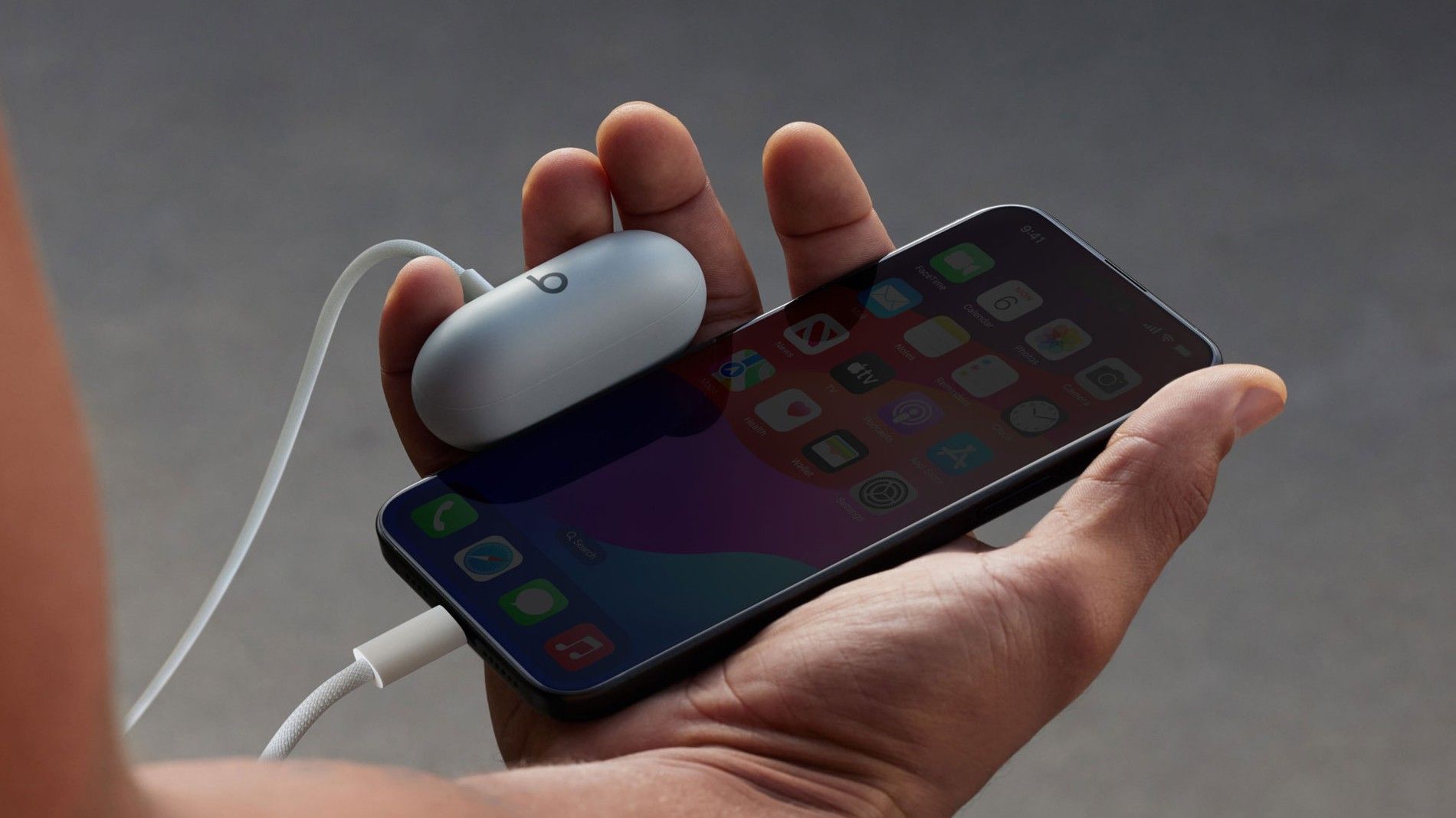
Beats Solo Buds See Significant Price Drop to £39
The Beats Solo Buds are currently available for £39, offering a portable design and cross-platform compatibility at a steep discount.
 🏠Smart Home
Apple Studio Display Sees $200 Price Drop for Black Friday
Amazon is offering a $200 discount on Apple's 27-inch Studio Display, bringing the entry-level price down to $1,399.