New Study Reveals US Hyperscale Data Centers Consume Up to 2% of National Electricity
Recent research calculates that 403 large US data centers consume between 1.5 and 2.2 percent of the nation's total electricity, highlighting the growing power demands of modern computing infrastructure.
 🧠AI Analysis
Photo: arstechnica.com
Key points
- Hyperscale data centers account for up to 2.2 percent of total US electricity usage.
- Annual greenhouse gas emissions from these facilities reach up to 31 million metric tons of CO2.
- Regional grids powering these sites derive 54 percent of their energy from fossil fuels.
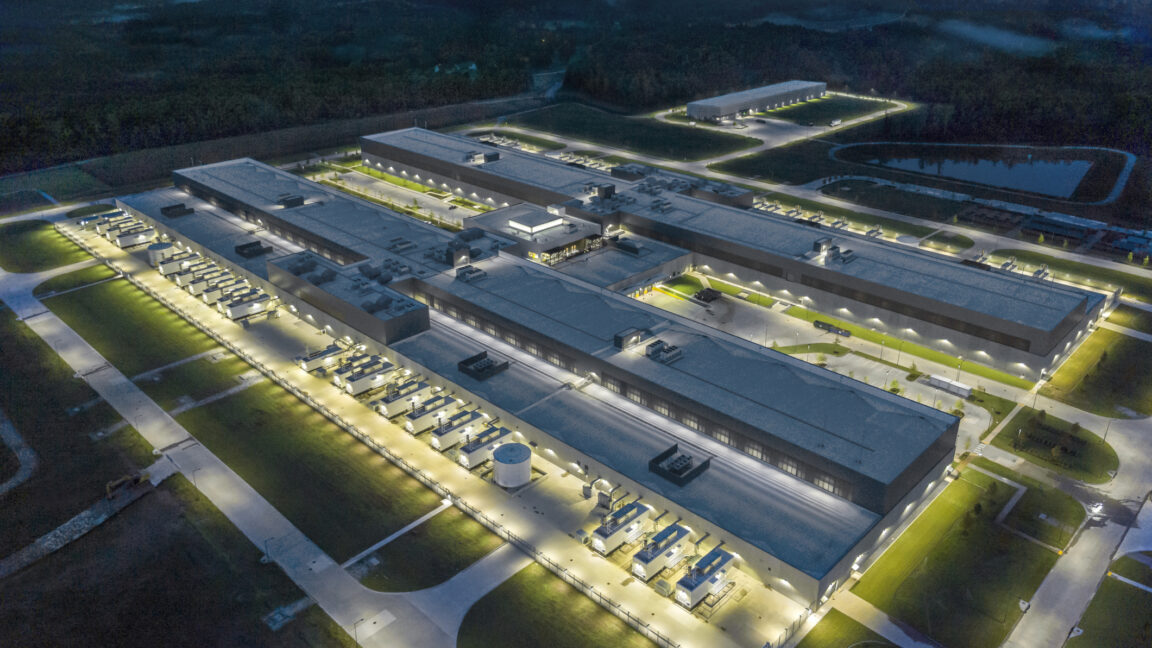
The rapid expansion of large language models and digital infrastructure has triggered an unprecedented surge in construction, leading to a new study that evaluates power consumption and emissions for US hyperscale data centers operating between May 2024 and April 2025. Researchers analyzed 403 verified facilities from a commercial database, each averaging an electrical capacity of roughly 40 megawatts, omitting hundreds of other sites due to incomplete capacity data.
By factoring in operating loads that range from standard 48 percent capacity up to 70 percent for intensive AI training, the study estimates that these facilities utilized between 68 and 99 terawatt-hours annually. This massive energy draw equals roughly 1.5 to 2.2 percent of total US electricity consumption, matching the yearly power demand of entire states like Wisconsin or Indiana. Furthermore, these sites account for nearly half of the estimated 192 terawatt-hours used by all US data centers combined in recent government reports.
In terms of environmental impact, the electricity feeding these operations resulted in 21 to 31 million metric tons of carbon dioxide emissions, representing about 0.5 percent of total US fossil fuel emissions. The local energy grids powering these locations rely on fossil fuels for roughly 54 percent of their generation, alongside 25 percent renewables and 21 percent nuclear power, though the figures exclude emerging trends like on-site natural gas turbines.
AI workloads and rapid infrastructure growth are placing unprecedented demands on national electrical grids, transforming how researchers track energy consumption and environmental impacts across the technology sector.
AI Analysis: This assessment highlights a growing friction between corporate tech expansion and national electrical grid capacities. As power consumption scales alongside computational demands, utility providers face severe pressures to maintain stable supplies without missing climate targets. Future developments will likely depend on whether data center operators can successfully integrate dedicated clean energy sources like solar or nuclear power rather than relying on standard regional grids.
Source arstechnica.com — arstechnica.com/science/2026/11/hyperscale-data-centers-use-2-of-us-ele… ↗
Read next
 📰Gadget News
Casio Expands Availability of Mesh-Band LA680 Vintage Watches
Casio has brought its refreshed LA680 vintage digital watch series to the Japanese market, featuring new stainless-steel mesh bands.
 📰Gadget News
Seiko Launches 7th Philippine Limited Edition Prospex Chronograph
Seiko has unveiled the HBJ006P1, a new limited-edition Prospex chronograph inspired by the Pan-Philippine Highway.
 🏠Smart Home
Modders Unlock Higher Frame Rates for GTA 6 on Jailbroken PS5 Consoles
Modders have successfully bypassed the 30 FPS limit in GTA 6 on jailbroken PlayStation 5 consoles, enabling higher frame rates on supported displays.
 📰Gadget News
Vivo X500s Leaks Point to Custom Dimensity 9600 Pro Chipset
The upcoming Vivo X500s is expected to debut with an enhanced version of the Dimensity 9600 Pro chipset and a high-refresh-rate display.
 📰Gadget News
Google Addresses Memory Issues Caused by Gemini in Chrome
Google has officially confirmed a fix for a bug that caused the Gemini web interface to consume excessive amounts of RAM in the Chrome browser.
 📰Gadget News
NVIDIA Halts AI Server Shipments to Key Southeast Asian Markets
NVIDIA has reportedly paused shipments of AI server hardware to Malaysia, Singapore, Thailand, and Indonesia amid tightening US export controls.