Cold War Nuclear Testing Left a 60-Year Radioactive Footprint in Canadian Maple Trees
University of Ottawa researchers have discovered why sugar maples in Gatineau Park held onto Cold War carbon-14 levels for decades longer than the surrounding atmosphere.
 🧠AI Analysis
Photo: gizmodo.com
Key points
- Cold War nuclear tests doubled global carbon-14 levels, creating a traceable atmospheric "bomb pulse."
- University of Ottawa researchers found that Gatineau Park sugar maples retained this radiocarbon signature roughly 2.2 years longer than the atmosphere due to biological carbon recycling.
- Fossil-fuel emissions ultimately helped dilute the remaining nuclear signatures by introducing carbon devoid of carbon-14.
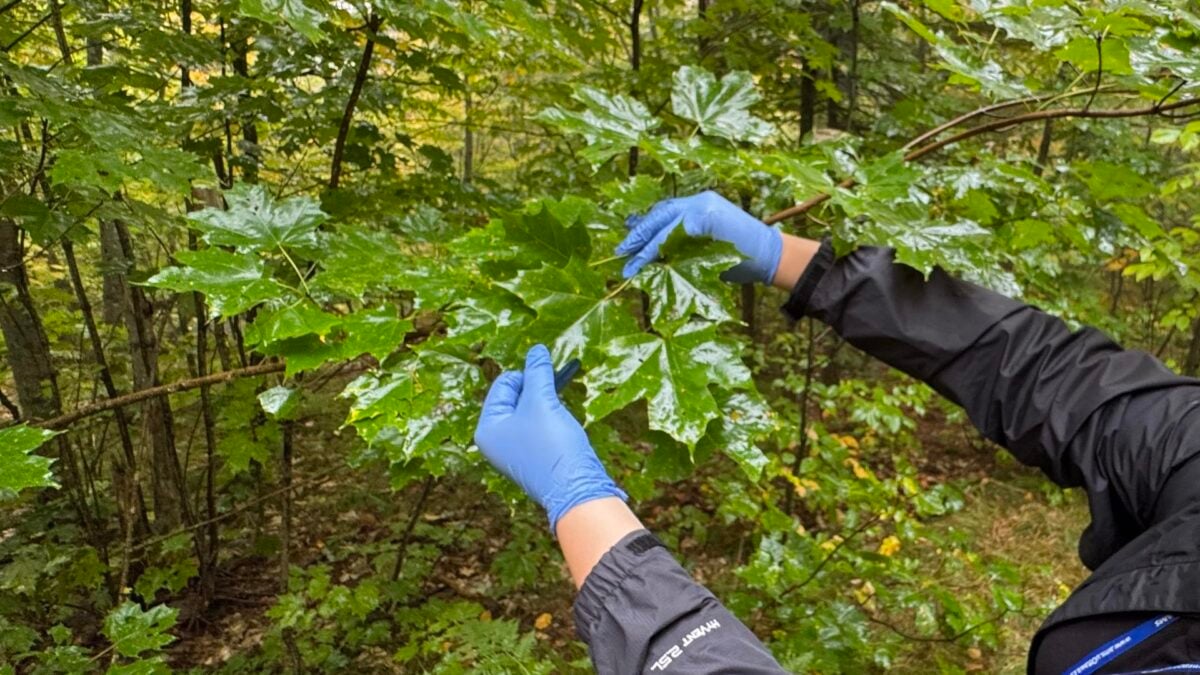
During the peak of above-ground atomic weapons tests in the mid-20th century, global carbon-14 levels roughly doubled due to atmospheric radiation interactions, an environmental phenomenon known as the "bomb pulse." While atmospheric radiocarbon eventually returned to baseline levels between 2021 and 2022, scientists at the University of Ottawa found that sugar maples in Canada's Gatineau Park lagged behind by approximately 2.2 years, reaching their baseline only around 2024.
Geoscientist Leonard Wassenaar and his colleagues determined that these iconic trees rely on older carbon stored from previous years to produce new foliage. By tracking distinct positive offsets between 1990 and 2019, the research team confirmed that the delayed drop-off was driven by biological recycling rather than direct atmospheric capture. Consequently, historical climate models that automatically assume an immediate one-to-one relationship between annual plant growth and atmospheric carbon will need explicit species-by-species corrections.
The prolonged retention of bomb-pulse radiocarbon was eventually countered by humanity's heavy consumption of coal, oil, and natural gas. Because fossil fuels are old enough that their carbon dioxide contains virtually no carbon-14, this industrial emissions output heavily diluted the nuclear byproducts over the past half-century. By 2025, measurements of Gatineau Park maple leaves showed that fossil-fuel dilution had officially overtaken the remaining nuclear signatures.
Source gizmodo.com — gizmodo.com/nuclear-tests-left-something-behind-in-canadas-iconic-maple… ↗
Read next
 ⌚Wearables
Apple Launches Health AI Study App for iPhone and Apple Watch Users
Apple has rolled out a dedicated application for its new Health AI Study, inviting US users to examine how people interact with conversational medical tools.
 💻Laptops & PCs
How to clear app caches on your Mac to free up storage and fix glitches
Learn when and how to manually clear application caches on your macOS device to reclaim valuable storage space and troubleshoot software glitches.
 🏠Smart Home
Area Launches Stakuri Plus: A Compact Phone Stand Packed With 17 Cleaning Tools
Japanese brand Area has released the Stakuri Plus, a portable smartphone stand that doubles as a comprehensive 17-in-1 electronics cleaning kit for roughly $16.
 🧭Buying Guides
Cloud vs. Local Storage: Which Backup Method Fits Your Gadgets Best?
A detailed comparison of cloud storage services like iCloud and Google Drive versus physical local drives, weighing access, costs, and reliability.
 🧭Buying Guides
Zelda: Ocarina of Time Remake Review Sparks Metacritic Debate
A single mixed review for the upcoming Zelda: Ocarina of Time remake on the Switch 2 has dropped its Metascore from 96 to 95, igniting backlash from fans.
 📱Phones
Understanding Sudden Phone Battery Drops: Causes and Fixes
Experiencing rapid battery percentage drops on your phone can be frustrating, but the issue usually stems from aging lithium-ion cells, background software processes, or …