Looking Back at Heinz von Foerster's 1960 Population Doomsday Prediction
A historical look at physicist Heinz von Foerster's famous 1960 mathematical model predicting extreme population limits, alongside a broader perspective on historical doomsday forecasts.
 🧠AI Analysis
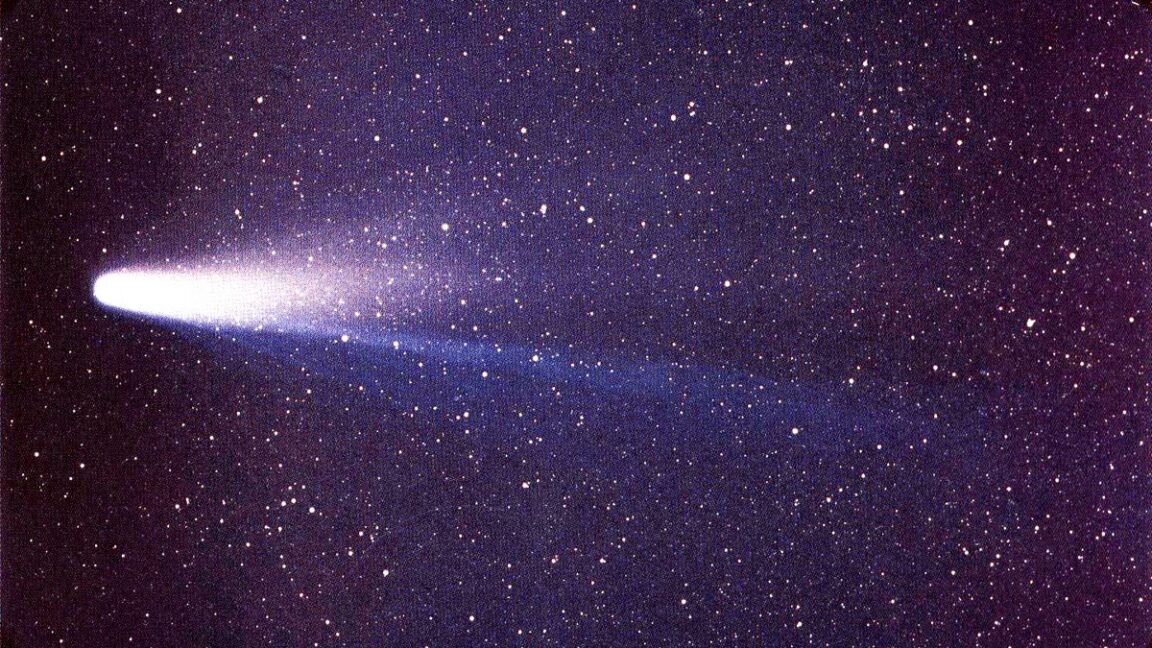
Photo: arstechnica.com
Key points
- Heinz von Foerster published a population prediction paper in Science in 1960.
- The model assumed exponential growth would push humanity toward an overpopulation limit.
- Global birth rates eventually dropped significantly below the projected trajectories.
As technology users grappled with widespread Microsoft service disruptions affecting essential productivity tools like Outlook, cultural observers noted an ironic calendar coincidence. The technical glitch landed on November 13, 2026, a date famously targeted in a 1960 academic paper as the theoretical end of humanity. Physicist Heinz von Foerster, writing in the journal Science alongside colleagues, utilized population dynamics equations to project that human growth would accelerate toward infinity, ultimately leading to overpopulation catastrophe rather than starvation.
Von Foerster's model mirrored earlier demographic theories, such as English economist Thomas Malthus's 1798 warnings about food supply limits driven by exponential growth. However, experts note that such formulas fail to account for shifting societal variables. Mathematical biologist Joel Cohen observed that von Foerster captured historical trends precisely at the moment those growth patterns began to shift, failing to foresee falling child mortality rates, rising life expectancy, and declining global birth rates.
Despite scholars initially labeling the mathematical hypothesis absurd, the paper's core equations generated surprisingly accurate short-term demographic projections through the 1970s and 1980s. Forecast accuracy only began deviating around 1993 as global birth rates dropped to roughly half of their 1960 levels. Throughout history, scientific, religious, and astrological figures have repeatedly forecasted global catastrophes—ranging from Martin Luther and Cotton Mather to 20th-century astrophysical hypotheses—none of which have ever materialized.
Source arstechnica.com — arstechnica.com/science/2026/11/its-the-end-of-the-world-as-we-know-it-… ↗
Read next
 ⌚Wearables
Apple Launches Health AI Study App for iPhone and Apple Watch Users
Apple has rolled out a dedicated application for its new Health AI Study, inviting US users to examine how people interact with conversational medical tools.
 💻Laptops & PCs
How to clear app caches on your Mac to free up storage and fix glitches
Learn when and how to manually clear application caches on your macOS device to reclaim valuable storage space and troubleshoot software glitches.
 🏠Smart Home
Area Launches Stakuri Plus: A Compact Phone Stand Packed With 17 Cleaning Tools
Japanese brand Area has released the Stakuri Plus, a portable smartphone stand that doubles as a comprehensive 17-in-1 electronics cleaning kit for roughly $16.
 🧭Buying Guides
Cloud vs. Local Storage: Which Backup Method Fits Your Gadgets Best?
A detailed comparison of cloud storage services like iCloud and Google Drive versus physical local drives, weighing access, costs, and reliability.
 🧭Buying Guides
Zelda: Ocarina of Time Remake Review Sparks Metacritic Debate
A single mixed review for the upcoming Zelda: Ocarina of Time remake on the Switch 2 has dropped its Metascore from 96 to 95, igniting backlash from fans.
 📱Phones
Understanding Sudden Phone Battery Drops: Causes and Fixes
Experiencing rapid battery percentage drops on your phone can be frustrating, but the issue usually stems from aging lithium-ion cells, background software processes, or …