Study Finds Global Lockdowns Led to Measurable Drop in Wildfire Activity
A new scientific study reveals that reduced human mobility during early 2020 lockdowns correlated with a 12.3 percent decrease in global active-fire detections.
 🧠AI Analysis
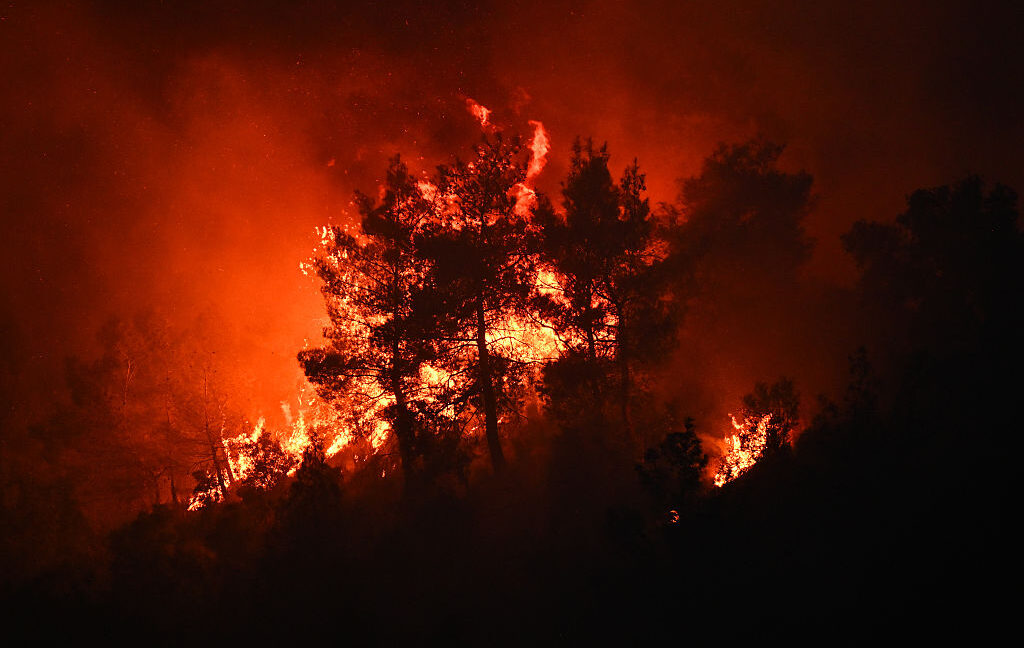
Photo: arstechnica.com
Key points
- Lockdowns in early 2020 led to a 12.3 percent drop in active-fire detections worldwide.
- Forest fires saw the steepest decline, dropping by 27.7 percent.
- Researchers used mobile data and NASA satellite thermal imaging to compare 2020 fire activity with 2013-2019 baselines.
A research team led by Chinese Academy of Sciences professor Jianghao Wang has published a study in Cell Reports Sustainability exploring how shifting human behavior alters wildfire patterns. By analyzing the unique conditions of the COVID-19 pandemic, the researchers utilized widespread lockdowns as a large-scale natural experiment to isolate humanity's net impact on global fire activity.
To measure the shift, the study cross-referenced regional lockdown orders and mobile phone mobility data with satellite observations from NASA and NOAA's Suomi NPP satellite. Using the VIIRS sensor to track thermal hotspots at a 375-meter resolution, the team compared active-fire detections during early 2020 restriction periods against historical baselines from 2013 to 2019, while controlling for weather variations.
The findings indicate that regions under mobility restrictions experienced roughly 12.3 percent fewer active-fire detections compared to the recent-past average. The reduction was not uniform across all ecosystems; forest environments saw a notable 27.7 percent decline in fires, whereas grasslands dropped by 8.4 percent. Other environments, including shrublands, savannas, and croplands, showed minimal variation during the evaluated timeframe.
AI Assessment: This research offers valuable empirical insight into the complex duality of human influence on environmental hazards, showing that routine human presence acts as a net driver for wildfire ignition. By leveraging pandemic-era data as an accidental control group, scientists can better model how human activity exacerbates environmental risk separate from climate factors alone. These insights could help inform future land management and human-access restrictions during high-risk dry seasons.
Source arstechnica.com — arstechnica.com/science/2026/11/how-the-worlds-fires-changed-while-huma… ↗
Read next
 ⌚Wearables
Apple Launches Health AI Study App for iPhone and Apple Watch Users
Apple has rolled out a dedicated application for its new Health AI Study, inviting US users to examine how people interact with conversational medical tools.
 💻Laptops & PCs
How to clear app caches on your Mac to free up storage and fix glitches
Learn when and how to manually clear application caches on your macOS device to reclaim valuable storage space and troubleshoot software glitches.
 🏠Smart Home
Area Launches Stakuri Plus: A Compact Phone Stand Packed With 17 Cleaning Tools
Japanese brand Area has released the Stakuri Plus, a portable smartphone stand that doubles as a comprehensive 17-in-1 electronics cleaning kit for roughly $16.
 🧭Buying Guides
Cloud vs. Local Storage: Which Backup Method Fits Your Gadgets Best?
A detailed comparison of cloud storage services like iCloud and Google Drive versus physical local drives, weighing access, costs, and reliability.
 🧭Buying Guides
Zelda: Ocarina of Time Remake Review Sparks Metacritic Debate
A single mixed review for the upcoming Zelda: Ocarina of Time remake on the Switch 2 has dropped its Metascore from 96 to 95, igniting backlash from fans.
 📱Phones
Understanding Sudden Phone Battery Drops: Causes and Fixes
Experiencing rapid battery percentage drops on your phone can be frustrating, but the issue usually stems from aging lithium-ion cells, background software processes, or …