Could the Arrival of OLED MacBook Pro Models Finally Open the Door for an OLED MacBook Air?
Apple's product hierarchy has long kept advanced display tech exclusive to the MacBook Pro, but the introduction of OLED laptops might finally shift the lineup.
 💻Laptops & PCs
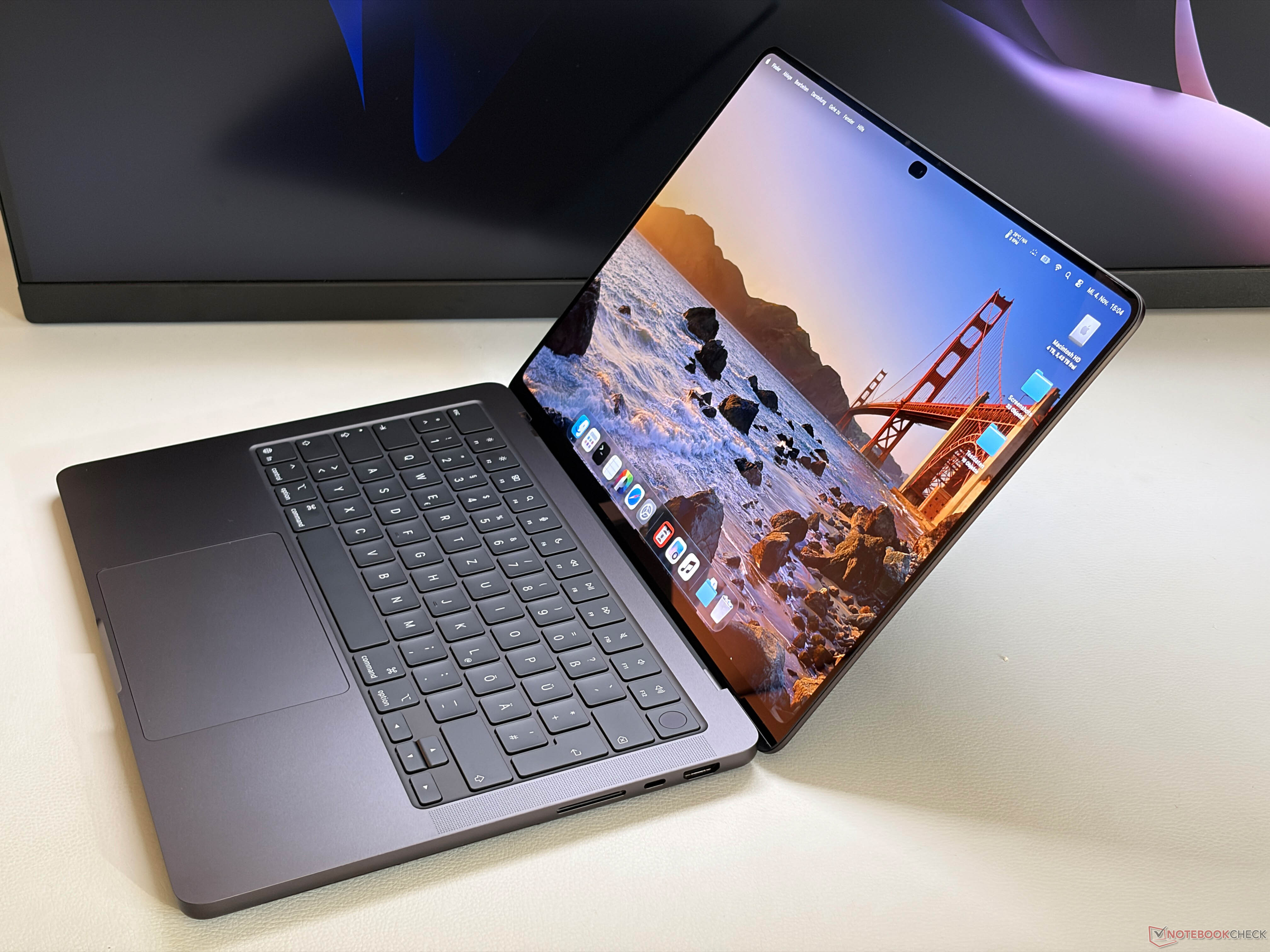
Photo: Notebookcheck News
Key points
- MacBook Air displays have traditionally been limited to 60 Hz IPS panels to protect Pro sales.
- The introduction of OLED MacBook Pro models could eventually pave the way for an OLED MacBook Air.
- Apple likely will continue to restrict certain features like refresh rates and tandem OLED on lower-tier devices.
Apple has historically maintained a strict product hierarchy to protect its profit margins, leaving popular everyday laptops like the MacBook Air equipped with standard 60 Hz IPS screens. Meanwhile, the entry-level 14-inch MacBook Pro has justified its higher price tag largely through a superior Mini-LED display running at 120 Hz. If Apple had introduced an OLED MacBook Air earlier, sales of the pricier Pro series would likely have plummeted as customers opted for the cheaper alternative.
However, the launch of a brand-new MacBook Pro featuring an OLED panel for the first time is beginning to disrupt this strategy. While current OLED versions are being sold alongside existing Mini-LED models, industry expectations suggest that OLED will eventually become the sole standard for the Pro line. This transition could eventually phase out the base 14-inch MacBook Pro variant, potentially clearing a path for an OLED-equipped MacBook Air, though likely at an increased price point alongside the entry-level MacBook Neo.
Even if an OLED MacBook Air eventually materializes, Apple is expected to retain intentional limitations to preserve the gap between consumer and professional tiers. Much like the recent iPad mini—which features an OLED screen restricted to a 60 Hz refresh rate while the iPad Pro boasts 120 Hz—future lightweight laptops will likely miss out on advanced features like tandem OLED, peak brightness, or wider color gamuts. Should you buy current models? Buyers prioritizing fluid display tech and supreme panel quality must still look to the Pro lineup, while budget-conscious users remain anchored to traditional specs.
Source Notebookcheck News — notebookcheck.net/Does-the-new-OLED-MacBook-Pro-also-pave-the-way-f… ↗
Read next
 ⌚Wearables
Apple Launches Health AI Study App for iPhone and Apple Watch Users
Apple has rolled out a dedicated application for its new Health AI Study, inviting US users to examine how people interact with conversational medical tools.
 🏠Smart Home
Area Launches Stakuri Plus: A Compact Phone Stand Packed With 17 Cleaning Tools
Japanese brand Area has released the Stakuri Plus, a portable smartphone stand that doubles as a comprehensive 17-in-1 electronics cleaning kit for roughly $16.
 🧭Buying Guides
Cloud vs. Local Storage: Which Backup Method Fits Your Gadgets Best?
A detailed comparison of cloud storage services like iCloud and Google Drive versus physical local drives, weighing access, costs, and reliability.
 🧭Buying Guides
Zelda: Ocarina of Time Remake Review Sparks Metacritic Debate
A single mixed review for the upcoming Zelda: Ocarina of Time remake on the Switch 2 has dropped its Metascore from 96 to 95, igniting backlash from fans.
 📱Phones
Understanding Sudden Phone Battery Drops: Causes and Fixes
Experiencing rapid battery percentage drops on your phone can be frustrating, but the issue usually stems from aging lithium-ion cells, background software processes, or …
 ⌚Wearables
Seiko Launches Limited-Edition Touch Chronograph Featuring Unique Baseball-Themed Dial
Seiko has released a 45th-anniversary chronograph celebrating the baseball manga Touch, limited to 4,500 pieces and priced at roughly $412.