Nintendo Switch 2 Ocarina of Time Sound Recognition Feature Tested
The Nintendo Switch 2 remake of The Legend of Zelda: Ocarina of Time introduces a microphone-based sound recognition feature for playing the in-game instrument, though testing reveals mixed reliability.
 ⌚Wearables
Photo: PCWorld
Key points
- The Nintendo Switch 2 remake of Ocarina of Time features a microphone-based ocarina mechanic.
- Docked mode testing showed inconsistent sound recognition and confusion between similar song sequences.
- Nintendo offers official manual ($34.99) and electric ($49.99) companion ocarinas to pair with the feature.
The Nintendo Switch 2 remake of The Legend of Zelda: Ocarina of Time introduces an interactive gameplay mechanic utilizing the console's built-in microphone. Players can hum tunes or use real instruments instead of standard controller buttons to play the ocarina, a vital tool for unlocking areas, manipulating the day-night cycle, and progressing through the game. The digital version costs $59.99, while the physical edition is priced at $69.99, with the Switch 2 console starting at $499.99.
Review testing indicates that the microphone feature yields inconsistent results when the console is docked. Users often need to hum loudly or move closer to the hardware, while external instruments like guitars can be dismissed as too quiet. Additionally, the system struggles to differentiate between similar twelve-song sequences like Zelda's Lullaby and Epona's Song during docked play, though handheld mode provides better accuracy. Nintendo also offers two official playable companion ocarinas—a manual version for $34.99 and an electric variant for $49.99 featuring automatic and free-play modes designed to interface with the console's audio detection.
Ultimately, while the microphone interaction feels like a creative novelty, traditional button inputs remain faster and more dependable for standard gameplay. Should you buy it? The core game remains exceptional, but users should approach the new audio-detection mechanic as an optional extra rather than a seamless replacement for standard controls.
Source PCWorld — pcworld.com/article/3283506/the-ocarina-of-time-sound-recognition-f… ↗
Read next
 🏠Smart Home
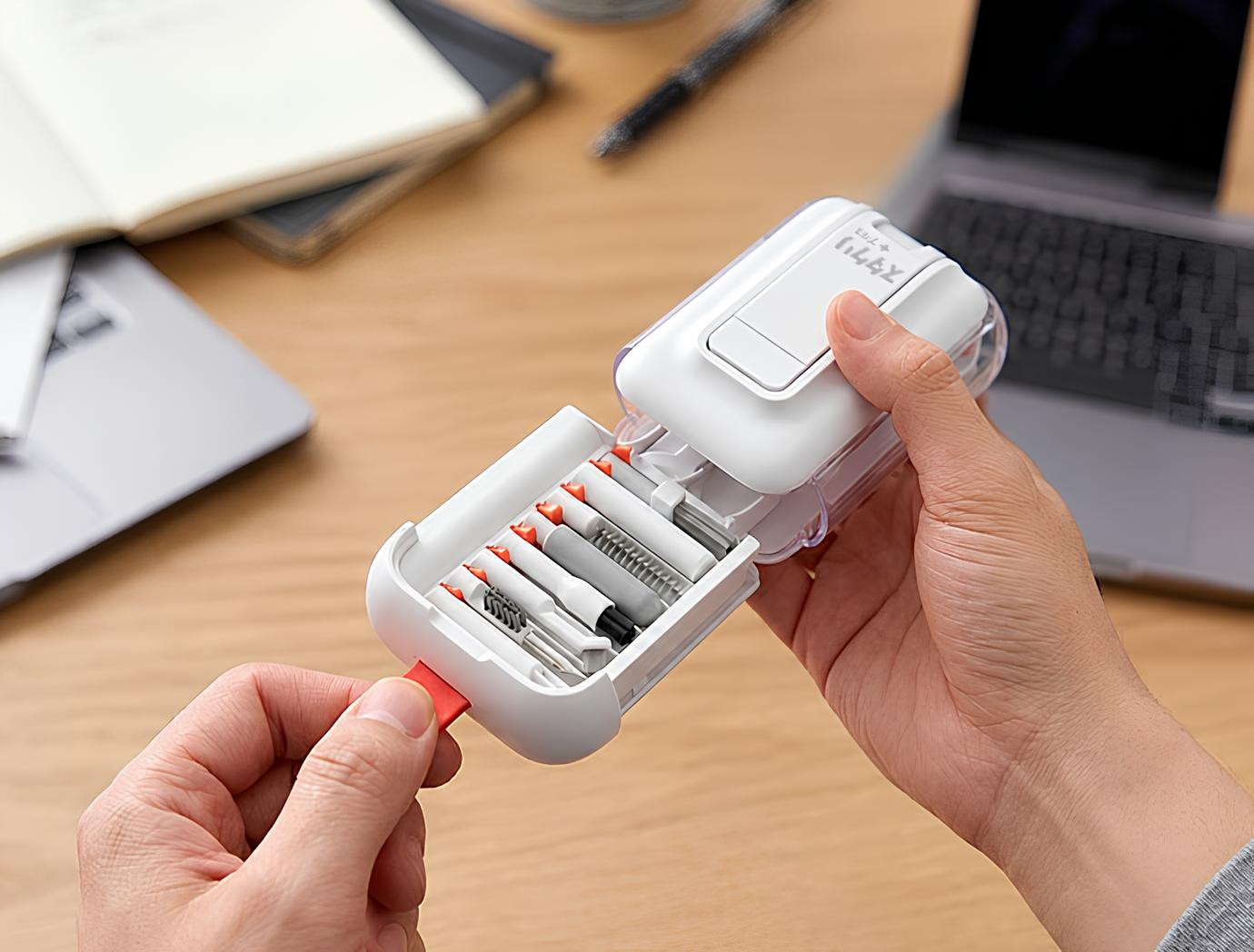
Area Launches Stakuri Plus: A Compact Phone Stand Packed With 17 Cleaning Tools
Japanese brand Area has released the Stakuri Plus, a portable smartphone stand that doubles as a comprehensive 17-in-1 electronics cleaning kit for roughly $16.
 🧭Buying Guides
Cloud vs. Local Storage: Which Backup Method Fits Your Gadgets Best?
A detailed comparison of cloud storage services like iCloud and Google Drive versus physical local drives, weighing access, costs, and reliability.
 🧭Buying Guides
Zelda: Ocarina of Time Remake Review Sparks Metacritic Debate
A single mixed review for the upcoming Zelda: Ocarina of Time remake on the Switch 2 has dropped its Metascore from 96 to 95, igniting backlash from fans.
 📱Phones
Understanding Sudden Phone Battery Drops: Causes and Fixes
Experiencing rapid battery percentage drops on your phone can be frustrating, but the issue usually stems from aging lithium-ion cells, background software processes, or …
 💻Laptops & PCs
What Actually Happens When Your Laptop Battery Drains to Zero
Allowing your laptop battery to completely drain can cause gradual degradation over time, though occasional depletion will not instantly ruin your device.
 💻Laptops & PCs
Microsoft Details Project Helix, Emphasizing Console Simplicity Over PC Complexity
Microsoft has shared fresh details on its upcoming Project Helix hardware, stressing that the next-generation machine will function primarily as a console while running P…