Google Pixel Tag Review Roundup: A Well-Built Tracker Hitting Platform Limits
Google's new Pixel Tag offers strong hardware integration and Ultra-Wideband precision, yet its performance remains constrained by underlying Find Hub network limitations.
 ⌚Wearables
Photo: 9to5google.com
Key points
- Pixel Tag features deep software integration and UWB support for precision finding
- Find Hub network performance is still recovering from its restrictive initial privacy rollout
- Google is gradually pushing all-area network defaults during new device setups
The Google Pixel Tag has arrived as a highly polished first-party tracker, showcasing direct hardware-software integration that sets it apart from third-party alternatives. Reviewers have praised its physical design, pointing to thoughtful additions like adjustable ringer volume and advanced Ultra-Wideband (UWB) support—a feature rarely seen on non-Apple accessories. Priced to compete in the item-tracking ecosystem, it stands out as a robust gadget for everyday carry, though its ultimate effectiveness depends entirely on Google's broader tracking infrastructure.
For users deciding who this device suits best, the Pixel Tag excels at close-range precision finding compared to rivals like Samsung's Galaxy-exclusive ecosystem or Apple's AirTags. However, critics note that the underlying Find Hub network continues to struggle with the consequences of its initial privacy-focused launch, which defaulted tracking to high-traffic areas only. While Google has begun prompting users to enable all-area tracking during recent device setups, the network still lags behind competitors in overall reach and reliability outside major metropolitan hubs.
Should you buy it? The Pixel Tag is a brilliant accessory that elevates local tracking performance, but it serves primarily as a temporary fix for a larger infrastructural hurdle. Prospective buyers should weigh whether local UWB precision matters more to them than regional coverage network consistency.
Source 9to5google.com — 9to5google.com/2026/11/15/google-pixel-tag-find-hub-problems/ ↗
Read next
 🏠Smart Home
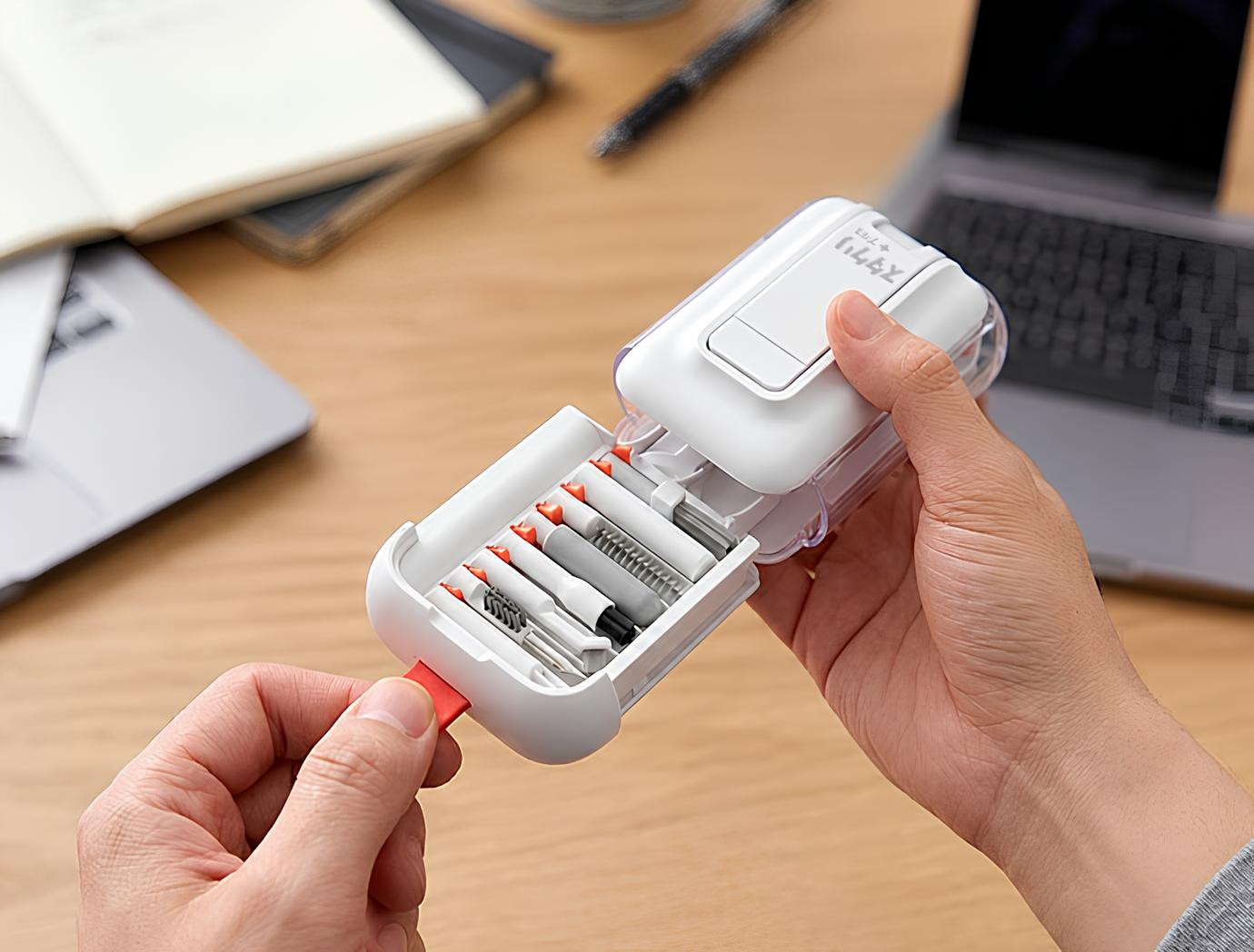
Area Launches Stakuri Plus: A Compact Phone Stand Packed With 17 Cleaning Tools
Japanese brand Area has released the Stakuri Plus, a portable smartphone stand that doubles as a comprehensive 17-in-1 electronics cleaning kit for roughly $16.
 🧭Buying Guides
Cloud vs. Local Storage: Which Backup Method Fits Your Gadgets Best?
A detailed comparison of cloud storage services like iCloud and Google Drive versus physical local drives, weighing access, costs, and reliability.
 🧭Buying Guides
Zelda: Ocarina of Time Remake Review Sparks Metacritic Debate
A single mixed review for the upcoming Zelda: Ocarina of Time remake on the Switch 2 has dropped its Metascore from 96 to 95, igniting backlash from fans.
 📱Phones
Understanding Sudden Phone Battery Drops: Causes and Fixes
Experiencing rapid battery percentage drops on your phone can be frustrating, but the issue usually stems from aging lithium-ion cells, background software processes, or …
 💻Laptops & PCs
What Actually Happens When Your Laptop Battery Drains to Zero
Allowing your laptop battery to completely drain can cause gradual degradation over time, though occasional depletion will not instantly ruin your device.
 💻Laptops & PCs
Microsoft Details Project Helix, Emphasizing Console Simplicity Over PC Complexity
Microsoft has shared fresh details on its upcoming Project Helix hardware, stressing that the next-generation machine will function primarily as a console while running P…